

What Sweden’s biggest tourist attraction tells us about psychological safety

Updated: Mar 5, 2025
Over the last few months, I’ve been busy designing a leadership development programme for managers in a global logistics company. One of the modules explores psychological safety, and it’s got me thinking a lot about my experience visiting Sweden’s number one tourist attraction—and no, it’s not the ABBA museum...although that is well worth a visit!

According to TripAdvisor, the top spot belongs to the Vasa Museum. This remarkable museum houses the world’s most intact and oldest warship—think of it as Sweden’s equivalent to the Mary Rose, only larger and more impressive. For 300 years, the Vasa lay submerged at the bottom of the cold Baltic Sea until it was raised to the surface in 1961. While the story of its recovery is captivating, it’s the tale of its tragic sinking that has stuck with me ever since my visit.

In 1628, the Vasa set sail from Stockholm on her maiden voyage, cheered on by thousands of spectators. No expense had been spared; she was one of the most ambitious projects Sweden had ever undertaken. Yet just 1,300 metres into her journey, a gust of wind caused her to tilt and take on water, ultimately leading to her sinking. Tragically, 53 men, women, and children drowned that day, while the others managed to swim to safety.
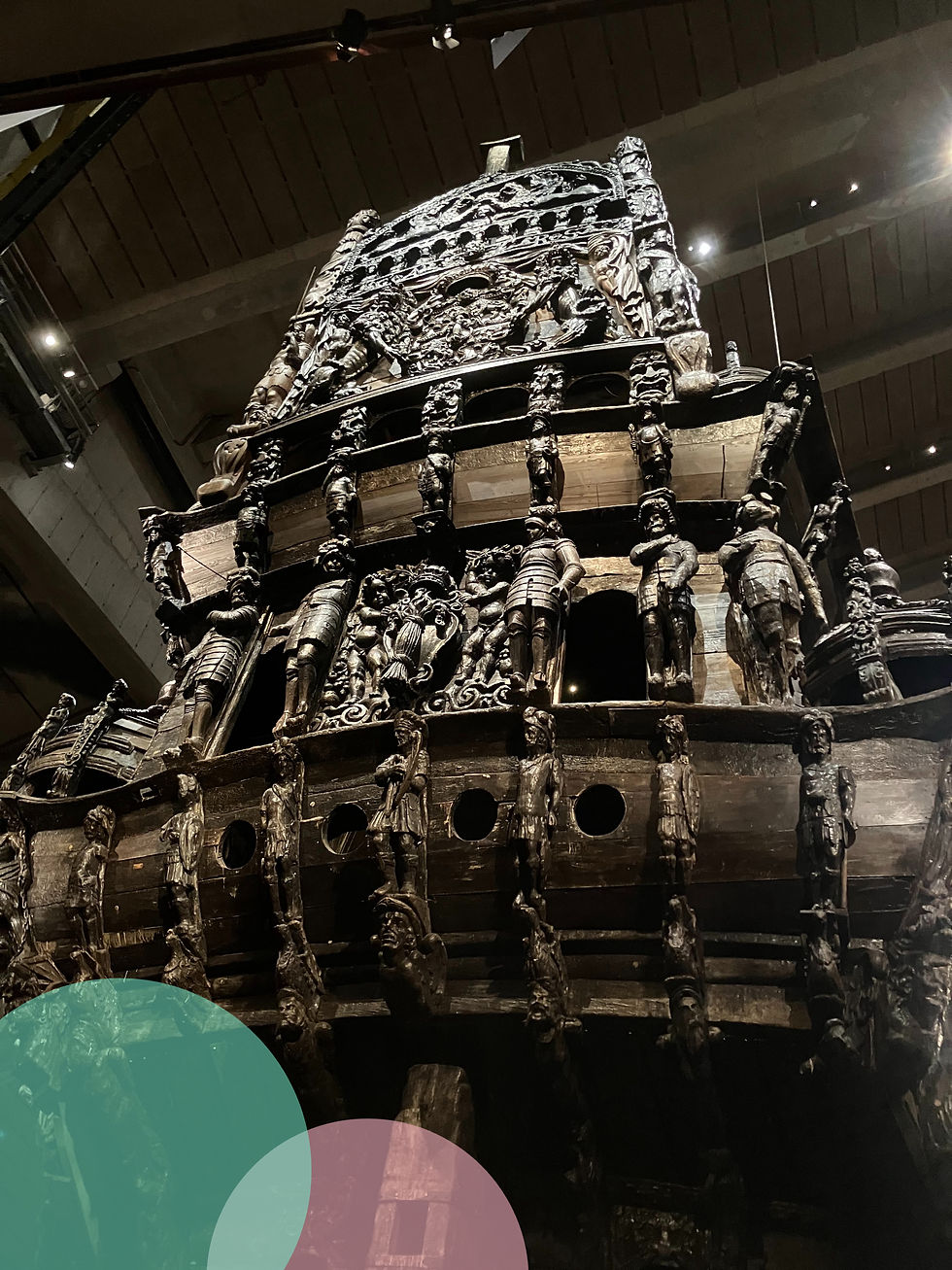
While no one was ever held accountable, an extensive number of factors contributed to the Vasa’s demise. First and foremost, the Vasa was a vanity project for the royal family. King Gustavus Adolphus wanted the Vasa to symbolise Sweden’s military might and solidify its place on the world stage. This desire led to a crucial design decision: the ship was constructed with a double gun carriage that raised its centre of gravity dangerously high, making it prone to capsizing. Although the captain and crew were aware of this design flaw, none felt safe enough to voice their concerns without fear of retribution.
The Vasa’s story highlights that without a culture of openness and trust, poor decisions can go unchecked and unchallenged.
While the stakes may not always be as dramatic as life and death, the impact of low psychological safety in organisations can also be catastrophic. Research by Deloitte (2023) shows that the absence of psychological safety can lead to decreased employee engagement, increased turnover, and ultimately, reduced organisational performance. In a work environment where individuals fear judgement or retaliation for speaking up, organisations risk sinking their own potential.
So, how can leaders foster psychological safety?
My research has shown that there are plenty of ways that leaders can create psychological safety, but here are my top five:
Role model vulnerability
Leaders set the tone for organisational culture, and their willingness to admit mistakes and seek help can significantly foster psychological safety. When leaders openly embrace their missteps as opportunities for learning rather than threats to their credibility, they create an environment where employees feel safe to do the same. This transparency encourages open dialogue and reduces the fear of judgement, paving the way for a more innovative and resilient workforce.
Build trust
Trust is the cornerstone of psychological safety. Leaders must cultivate an atmosphere where team members feel secure in sharing their thoughts and ideas without fear of retribution. This can be achieved through consistent actions, active listening, and honouring commitments. When employees believe their leaders genuinely care about their well-being and input, they are more likely to voice their opinions and take risks, ultimately leading to better team collaboration and problem-solving.
Develop yourself
Investing in personal development as a leader directly correlates with enhanced psychological safety within teams. According to the Ecsell Institute (2022), when leaders are rated highly for their skills—scores of 9 or 10—psychological safety averages around 84%. In contrast, those rated 6 or lower experience a drastic drop to an average of 36%. This emphasises the importance of continuous learning and self-improvement. Leaders should seek feedback, pursue training, and engage in self-reflection to enhance their effectiveness and create a more supportive environment for their teams.
Recognise and reward those who speak up
Positive reinforcement is a powerful tool in shaping behaviour. Leaders should actively recognise and reward employees who raise concerns, challenge the status quo, or contribute innovative ideas. This recognition can take many forms, from verbal praise in team meetings to formal awards or incentives. By celebrating those who speak up, leaders reinforce the notion that all contributions are valued, encouraging a culture where team members feel empowered to express themselves.
Foster inclusivity
Creating an inclusive environment is essential for psychological safety. Leaders should actively seek diverse perspectives and ensure all voices are heard, particularly from underrepresented groups. This can be achieved through structured brainstorming sessions, anonymous feedback tools, or regular check-ins that encourage input from everyone. By valuing diverse viewpoints, leaders not only enrich decision-making but also demonstrate that every team member’s opinion is important, further enhancing a culture of safety and trust.
These strategies collectively contribute to fostering a psychologically safe environment where employees feel valued, empowered, and ready to take risks in pursuit of innovation and growth.
The story of the Vasa is a stark reminder for me of the consequences of silence. What are you doing in your organisation to build a culture of psychological safety?
Get in touch to find out how we could help by emailing hello@makeitstick.uk
